
Last updated November 21, 2026
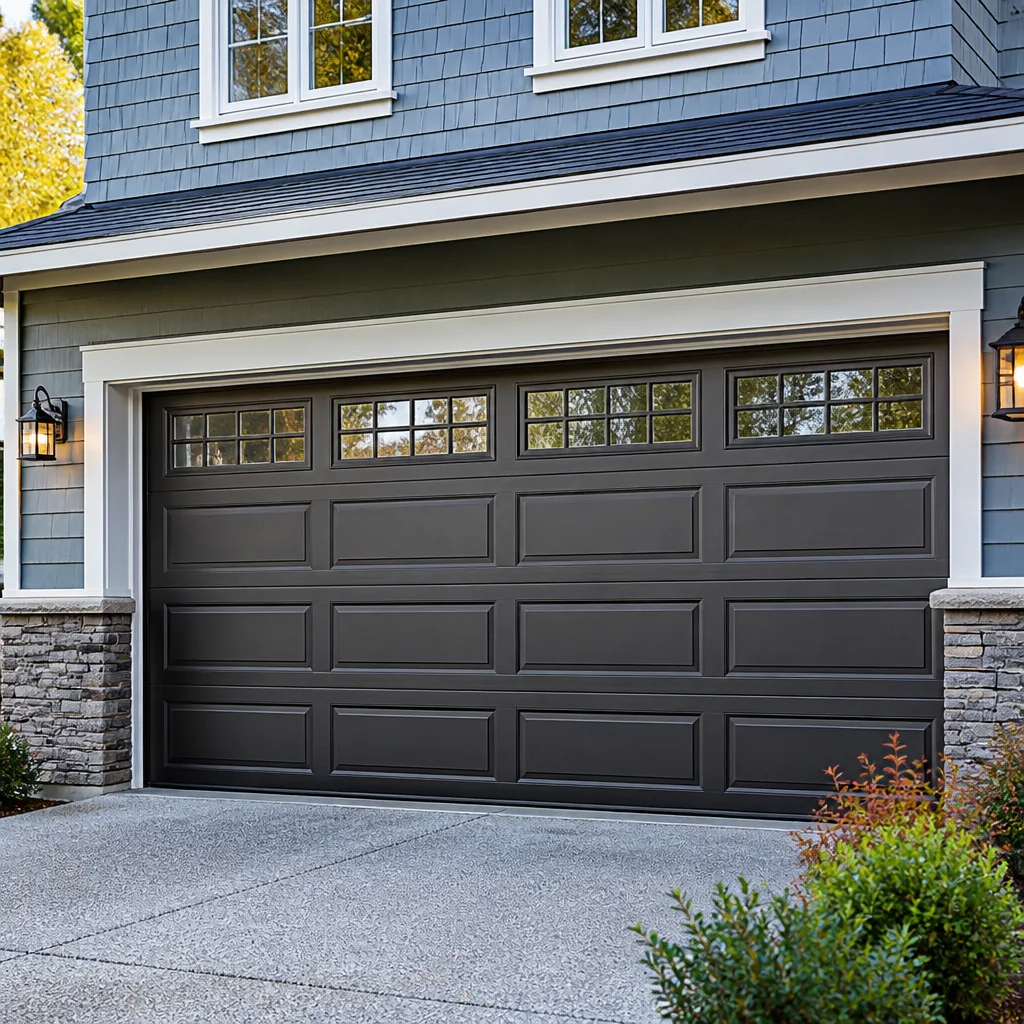 Raised-panel steel
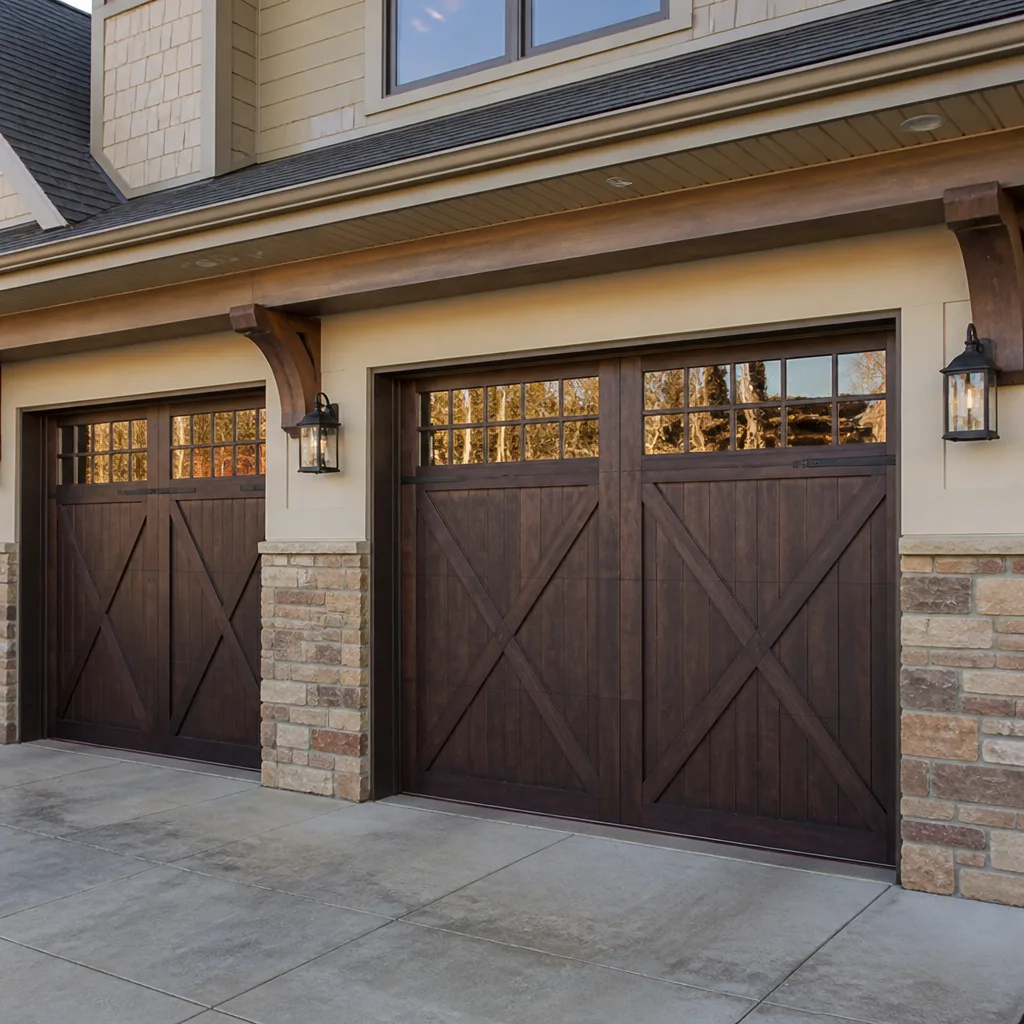 Carriage house
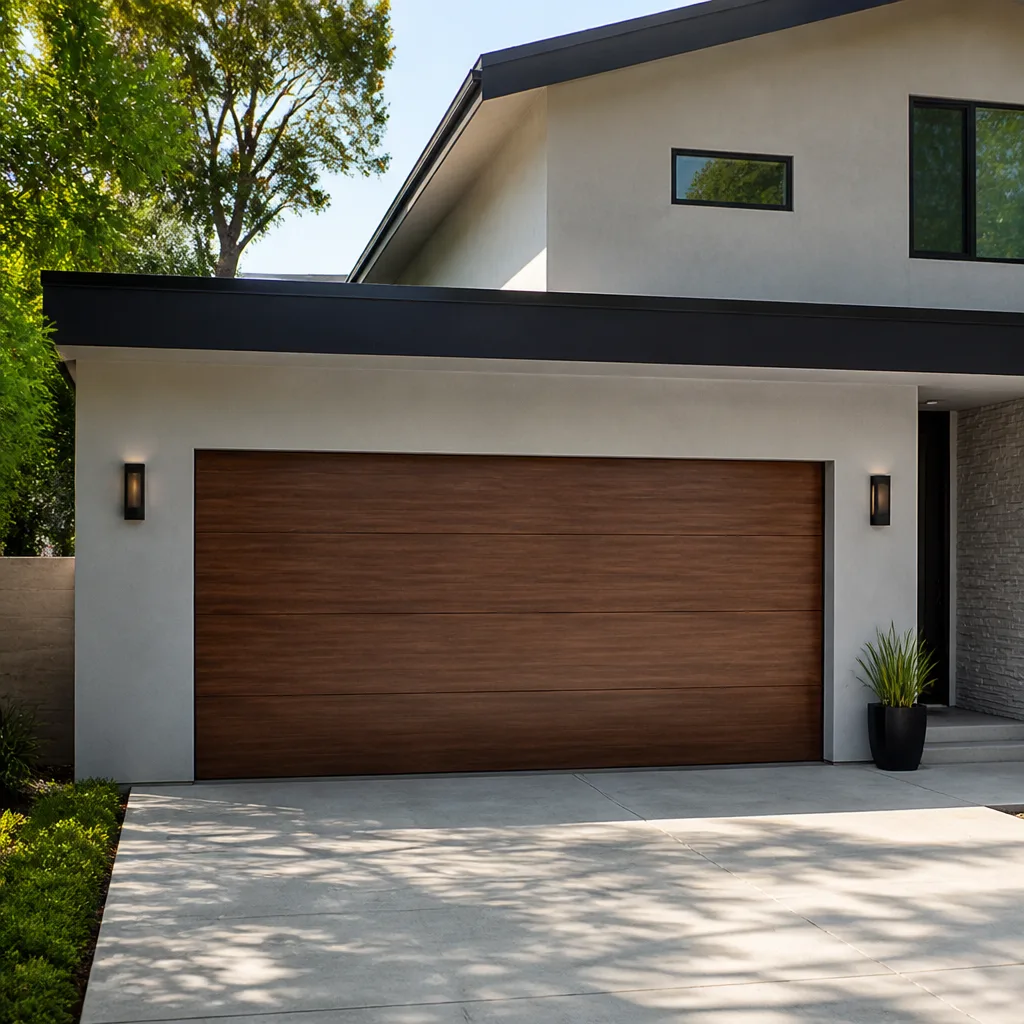 Modern flush
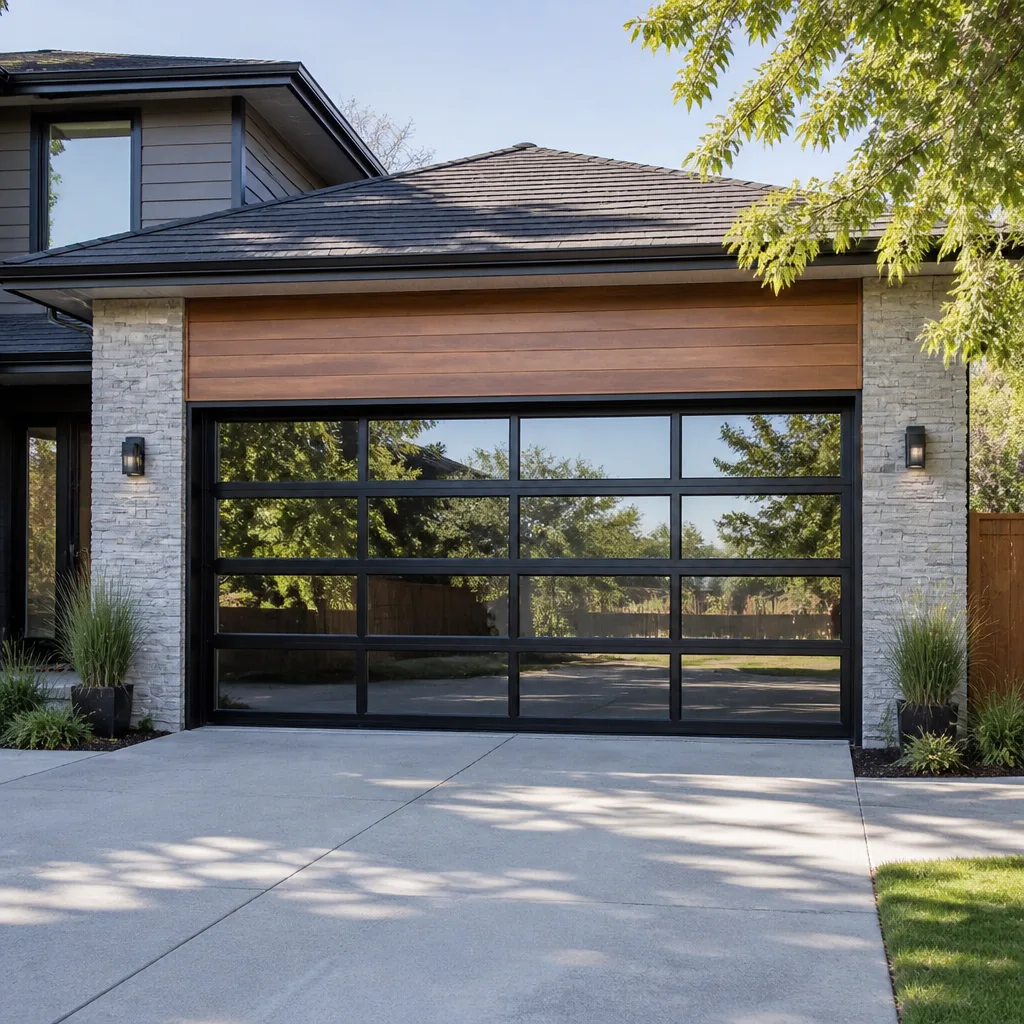 Full-view glass
 LiftMaster openers
 Chamberlain openers
Full 25-point door and opener safety check with every visit - springs, cables, rollers, tracks, and your LiftMaster or Chamberlain opener included
You get a price before we start. It does not change when the pro arrives.
Get your free estimateGarage Door Repair Troubleshooting in Bristol: Common Problems and How to Fix Them
Most homeowners treat a stuck garage door the same way: they pull the manual release and try to lift it. That single move is where a lot of small problems become expensive ones, because a torsion spring that has already failed is no longer holding the door’s weight, and the full load drops onto cables, drums and hinges at once. Knowing which of the four systems has actually failed – opener, spring, track, or cables and drums – changes everything about the next step you take. This guide shows Bristol homeowners how to sort a door failure into the right category using sound, sight and a few safe checks, and where the hard lines are that you should never cross yourself.
Quick Answer
A garage door that won’t open usually has one of five root causes: a failed spring, an opener problem, a door off its track, a snapped or jumped cable, or a power and safety-sensor fault. Troubleshooting in Bristol starts by listening to the door and watching it move before touching the opener, and any problem involving springs or cables should go to a trained technician rather than a DIY repair.
Styles & brands we work with
- Raised-panel steel
- Carriage house
- Modern flush
- Full-view glass
- LiftMaster openers
- Chamberlain openers
Table of Contents
- The Four Categories Every Garage Door Problem Falls Into
- Why “The Door Won’t Open” Has Five Different Causes
- Torsion vs. Extension Springs: What Bristol Homes Actually Have
- Diagnosing Opener Failure Without Opening the Housing
- Track Misalignment and Roller Wear: The Gradual Failures
- Cable and Drum Problems: When the Door Sits Crooked
- How Connecticut Seasons Affect Your Door’s Hardware
- The Bristol Troubleshooting Decision Tree
- Red-Line Actions: What Bristol Homeowners Should Never Attempt
The Four Categories Every Garage Door Problem Falls Into
Almost every garage door failure in Bristol traces back to one of four mechanical systems, and sorting your problem into the right category is more useful than chasing a long symptom list. The opener is the motor and control system. The springs are the counterbalance that make a 150-pound door liftable by hand. The track and rollers are the path the door travels. The cables and drums transfer the spring’s force to the door’s bottom corners. When one of these fails, the others can be dragged down with it, which is why diagnosis comes first and parts come second.
Here’s how the categories break down in practice:
- Opener problems show up as a motor that hums, clicks, beeps or does nothing at all, while the door itself sits level and intact. The door may still be liftable by hand if you’re careful, which tells you the springs are still doing their job.
- Spring problems announce themselves with a loud bang from the garage, a door that suddenly feels extremely heavy, or a visible gap in the spring coil above the door.
- Track problems usually come on slowly: the door gets noisier, binds at one height, or a roller pops out of the channel.
- Cable and drum problems leave the door hanging crooked, with one side higher than the other, or a cable visibly loose and dangling.
The reason this categorization matters is cost and safety. An opener issue often resolves with a remote, sensor alignment or a control board. A spring or cable issue is a different kind of job entirely, and it’s the one where a wrong first move raises the repair from a straightforward spring replacement to a cable-and-drum job. That’s the sequence problem this guide is built around. Bristol homes have a mix of door ages, and we work on every one of the major brands, including Clopay, Amarr and Wayne Dalton doors and LiftMaster, Chamberlain, Genie and Craftsman openers, so the diagnosis process below holds whether your door is ten years old or forty.
Why “The Door Won’t Open” Has Five Different Causes
When a homeowner calls and says the door won’t open, we know there are five likely stories behind that sentence, and they don’t all point to the same repair. The first thing to do is a safe observation: stand outside the door’s path, watch what happens when the opener runs, and listen.
- The opener runs, the door doesn’t move, and the motor hums or strains. This usually means a broken spring. The opener is trying to lift a door whose counterbalance has failed, and it can’t. Stop running the opener when you see this, because the motor and gears are taking load they weren’t built for.
- The opener runs, the door doesn’t move, and the motor is quiet. This points to a disconnected trolley, a stripped gear in the opener, or the manual release having been left engaged. Press the wall button and watch whether the trolley moves along the rail without the door.
- The opener beeps or flashes but does nothing. Safety sensors are the usual suspect. Look for an obstruction, a misaligned sensor eye, or a sun glare issue if the sun hits the sensor directly.
- The door lifts unevenly, then stops. A cable has likely come off a drum or snapped, and the door is now binding because one side is carrying more load.
- The door moves a few inches, then reverses. This is a travel-limit or force-setting issue in the opener, or a roller binding in the track.
Each of these leads to a different repair and a different urgency level. That’s also why a phone conversation with a specialist is worth ten minutes of guessing: describing the sound and the door’s behavior is often enough to narrow it to one category before anyone arrives. If your door is doing any of the above, our garage door repair team can talk it through and get you a written estimate.
Torsion vs. Extension Springs: What Bristol Homes Actually Have
The type of spring on your door determines how it fails and how dangerous the failure is. Torsion springs mount horizontally on a shaft above the door and twist to store energy. Extension springs run along the horizontal tracks on each side and stretch. Most contemporary doors use torsion springs; many older Bristol homes still have extension springs, and both need the same respect.
A torsion spring failure is usually sudden and loud – a sharp bang from the garage, followed by a door that suddenly weighs what it actually weighs. That’s the moment to stop. An extension spring failure can be just as violent, and a stretched spring that breaks can send hardware across the garage. In both cases, the spring is holding stored energy even when the door is closed, so nothing about it should be touched, adjusted or “tested” by a homeowner.
What you can safely check:
- Whether the door is level in the closed position. A torsion-sprung door that sits crooked usually has a cable issue alongside the spring.
- Whether you can see a visible gap in a torsion spring coil or a clearly stretched or broken extension spring. Look, don’t touch.
- How heavy the door feels. If you can lift it a few inches by hand without strain, the spring may be intact. If it feels like dead weight, stop immediately and don’t force it.
When a spring has failed, the repair is a spring replacement, and it should be treated as its own job rather than a sidelight to a general repair call. That’s why we offer garage door spring repair as a dedicated service. Springs are matched to the door’s weight, and installing the wrong size shortens the life of the new spring and strains the opener. If a technician is replacing a spring, pairing it correctly to the door matters as much as the spring itself.
Diagnosing Opener Failure Without Opening the Housing
Opener failure is the one category where a homeowner can do quite a bit of useful troubleshooting before calling. The opener is electronics, not stored mechanical energy, so checking a few basics is safe and often solves the problem without a visit.
- Test the wall control, not just the remote. If the wall button works and the remote doesn’t, the issue is the remote or the receiver, not the motor. Replace the remote battery first.
- Check the power source. A tripped breaker or a GFCI outlet that has tripped will cut the opener entirely. Many Bristol garages have their opener on a GFCI circuit, and a tripped outlet looks identical to a dead opener.
- Look at the safety sensors. The two small photo-eye sensors at the bottom of the tracks should have a steady light on each. A blinking light means misalignment or an obstruction. Clean the lenses and check that nothing has shifted the brackets.
- Listen for the beep or click sequence. Modern openers from LiftMaster, Chamberlain, Genie and Craftsman often flash a diagnostic code or beep a set number of times when a limit or force setting is the problem. Note the pattern; it narrows the fault quickly.
- Watch the trolley. If the opener runs but the door doesn’t move and the trolley stays put, the issue is in the opener’s drive, not the door.
Openers from the major brands all have their own quirks, and knowing LiftMaster and Chamberlain logic boards from Genie and Craftsman units speeds up diagnosis considerably. That’s what our garage door opener repair service is built around. If you’ve worked through the list and the opener still misbehaves, a technician can usually isolate the fault at the door. And if you’ve already opened the housing yourself without unplugging the opener first, stop and let a technician take it from there: the capacitor inside can hold a charge after the unit is unplugged.
What the opener’s behavior tells you
- Hums but doesn’t move: stripped gear, or the door is too heavy for the opener because of a spring or roller problem.
- Clicks once and stops: control board or travel-limit fault.
- Moves a few inches and reverses: force setting, binding roller, or a sensor obstruction.
- Dead, no lights: power supply, GFCI, or a blown fuse on the board.
Track Misalignment and Roller Wear: The Gradual Failures
Track and roller problems rarely happen overnight. They build through a season of small noises and small bindings, and by the time a door refuses to close, the cause has usually been developing for months. Bristol’s freeze-and-thaw rhythm makes this worse: metal track contracts in winter, expands in spring, and fasteners work loose over time.
The most common track-related failures we see:
- Misaligned vertical track. The door binds at a specific height. A track knocked out of alignment by a car bumper or a shifting foundation can be re-set, but it needs to be squared and anchored properly, not bent back by hand.
- Rollers worn flat. Steel rollers develop flat spots; nylon rollers crack. A flat roller makes a rhythmic thump as the door travels. Once a roller is flat, the door drags and the opener works harder.
- Loose track brackets. The horizontal track is held by brackets screwed into the ceiling. When these loosen, the door drifts sideways and the rollers start to jump the channel.
- Hinges and bearings dried out. Metal-on-metal grinding is usually dried hinges or a dry bearing plate, not a worn-out door.
The one track repair a homeowner can safely do is replacing a cleanly popped roller that has jumped the channel on a door at rest, with the opener unplugged, before running the door. Anything involving bent track, a door hanging off the horizontal track, or a roller that won’t seat should go to a specialist, because lifting the door back onto a bent track can bring the whole assembly down. Routine inspection is the best defense here; a technician checking track alignment, roller condition and hinge wear once a year catches most of these before they become a stuck door.
Cable and Drum Problems: When the Door Sits Crooked
Cables are the most dangerous component on a garage door after the springs, and they’re the one that most often gets misdiagnosed. A cable runs from a drum at the top of each side down to the bottom bracket of the door, and it’s under spring tension at all times. When a cable jumps the drum, frays or snaps, the door hangs crooked, one corner dropping lower than the other, and the door can bind or fall.
The visual cues are specific:
- The door is not level in the closed position, with one side clearly higher.
- A cable is visibly slack, kinked or dangling on one side of the door.
- The drum at the top has cable piled up or the cable has slipped off its groove.
- The door runs noisily, with a scraping sound from one side.
None of these should be handled by a homeowner. A cable under tension that lets go can cause serious injury, and a cable that’s already compromised can snap while you’re looking at it. The correct response to any of the above is to stop operating the door, keep people clear of it, and call. Cables and drums work together with the springs, which is why a snapped cable alongside a failed spring usually means both are part of the same repair. If you need to secure the door in the meantime, close it if it’s safe to, and don’t manually lift it; a crooked door has uneven load on the hardware and the safer move is to leave it be until a technician arrives.
How Connecticut Seasons Affect Your Door’s Hardware
Cold and heat both push on garage door hardware, and Bristol’s four-season swing does the door no favors. In a colder stretch, steel springs lose some tension and stay slightly contracted, which shifts the door’s balance. Metal tracks contract and fasteners loosen. Grease thickens and rollers drag. Head into spring and everything expands, hardware shifts again, and the door that ran fine in November suddenly feels off.
Those seasonal swings are one reason a spring that’s near the end of its life tends to fail at a temperature extreme. It’s not that winter breaks springs; it’s that the dimensional change is the extra load the spring had left to give. The same is true for cables: contraction and expansion plus loosened track brackets puts extra load on the running gear.
What helps in a Nutmeg State climate:
- A seasonal visual check at the start of cold weather and again in spring: look at the springs, cables, rollers and track.
- Keep the tracks clean and lightly lubricated, but never use grease or heavy oils, which thicken in cold. A proper garage door lubricant is the right product.
- Watch for track brackets and ceiling fasteners that have worked loose over the heating season, since a loosened bracket is a small fix that prevents bigger ones.
- Be aware of how the door feels in the cold; a door that suddenly feels heavier in January than it did in October is a signal that the balance and springs need a look.
We do see this pattern build over many years in Bristol homes: a door that has been adjusted and readjusted through several Connecticut winters starts to accumulate small misalignments that, together, make the door bind and strain the opener. Seasonal attention to the hardware keeps you ahead of that curve.
The Bristol Troubleshooting Decision Tree
The most direct way to sort a problem is to match the symptom to the sound and go from there. Before you start, stand outside the door’s path, close the door if it’s safe to, and don’t reach up to the door’s moving parts. Then follow this tree.
- Door won’t open + loud bang happened recently + opener hums or strains: failed spring. Stop operating the door. Call a technician. Do not pull the manual release.
- Door won’t open + opener runs quiet + trolley doesn’t move: disconnected trolley or stripped drive gear in the opener. Unplug the opener before inspecting the rail. A technician can usually restore the opener rather than replace it.
- Door won’t open + opener beeps or flashes + lights on the sensors are blinking: safety sensor problem. Clean the sensor eyes and check for obstructions, then try again. If the sun is hitting the sensor directly, a shaded bracket can help.
- Door hangs crooked + one side lower: cable or drum problem. Stop using the door. Call a technician; a technician will also check whether the spring is still healthy.
- Door binds at one height + scraping sound: track misalignment or a roller out of the channel. Don’t force the door past the bind; a technician can realign and re-anchor the track.
- Door runs fine but gets noisier + the noise is rhythmic: flat roller or dry hinge. A technician can replace rollers and lubricate the hinges and bearings.
- Door reverses a few inches after moving: travel limit or force setting, or a binding roller. Check the sensors first, then have the opener settings checked.
When in doubt, the safe answer is to stop operating the door and book a technician. Working through the tree narrows the diagnosis before the visit and tells you what not to do in the meantime.
Red-Line Actions: What Bristol Homeowners Should Never Attempt
Some of the repair details above sound approachable, and a few are. But a handful of actions should never be attempted by anyone without training, because the hardware involves stored energy or electrical parts that can cause serious injury.
- Removing or adjusting a spring. A torsion spring is under heavy tension even when the door is closed, and the winding bars needed to adjust it are specific tools. A slipping winding bar can take a hand with it. Never attempt a spring wind or un-wind.
- Lifting the door with a broken spring. A door with a failed spring is far heavier than the mechanism is balanced for; forcing it up puts the entire load on the cables and can snap a compromised one.
- Pulling the manual release with a broken spring. This is the single most common way a small repair becomes a large one. The release lets the full weight of the door fall onto the cables and drums, and in the worst case the door can drop. Leave the release alone until the spring is checked.
- Repairing or lubing cables and drums under tension. A cable that’s frayed or jumped a drum can snap at any moment. Don’t touch it; keep clear and call.
- Opening the opener housing while plugged in. The capacitor can hold a charge after the power is off. A technician will unplug and test the board safely.
- Bending a bent track back by hand. A bent track has lost its alignment; bending it by hand can crack the metal or throw the door off the track entirely. Realignment needs the track squared and re-anchored.
There’s a pattern: these are the repairs with stored energy or high tension. That’s exactly why the trade treats spring and cable work as specialist work, and why any technician on a garage door job should be a garage door specialist rather than a general handyman who also fits a door now and then.
Common Mistakes to Avoid
- Pull the manual release as a first step. If the spring has failed, that move puts the door’s full weight on the cables and drums, and a straightforward spring repair becomes a cable-and-drum job. Check the door’s weight and listen for a recent bang before touching the release.
- Force a binding door up with the opener. A door that’s off-track or has a broken spring will burn out the opener’s motor and gear if you keep running it. Stop the opener and diagnose first.
- Spray the tracks with household oil or grease. Those thicken in Connecticut cold and collect grit. Use a garage-door-rated lubricant; dry silicone or lithium works, table oil doesn’t.
- Replace a spring with the wrong size. Springs are matched to door weight. The wrong spring overworks the opener and can fail early. Springs should be sized to the door, not chosen by eye.
- Ignore the photo-eye sensors on the assumption it’s the opener. A blinking sensor light is often the whole problem, and cleaning the eyes fixes it in minutes.
- Trust a general handyman with a spring repair. Springs are the highest-risk job on a garage door. A garage door specialist has the pieces on the truck and the training to do it correctly.
- Wait out a crooked door. A door that sits unevenly can bind and drop. Keep everyone clear and get it diagnosed.
See the difference
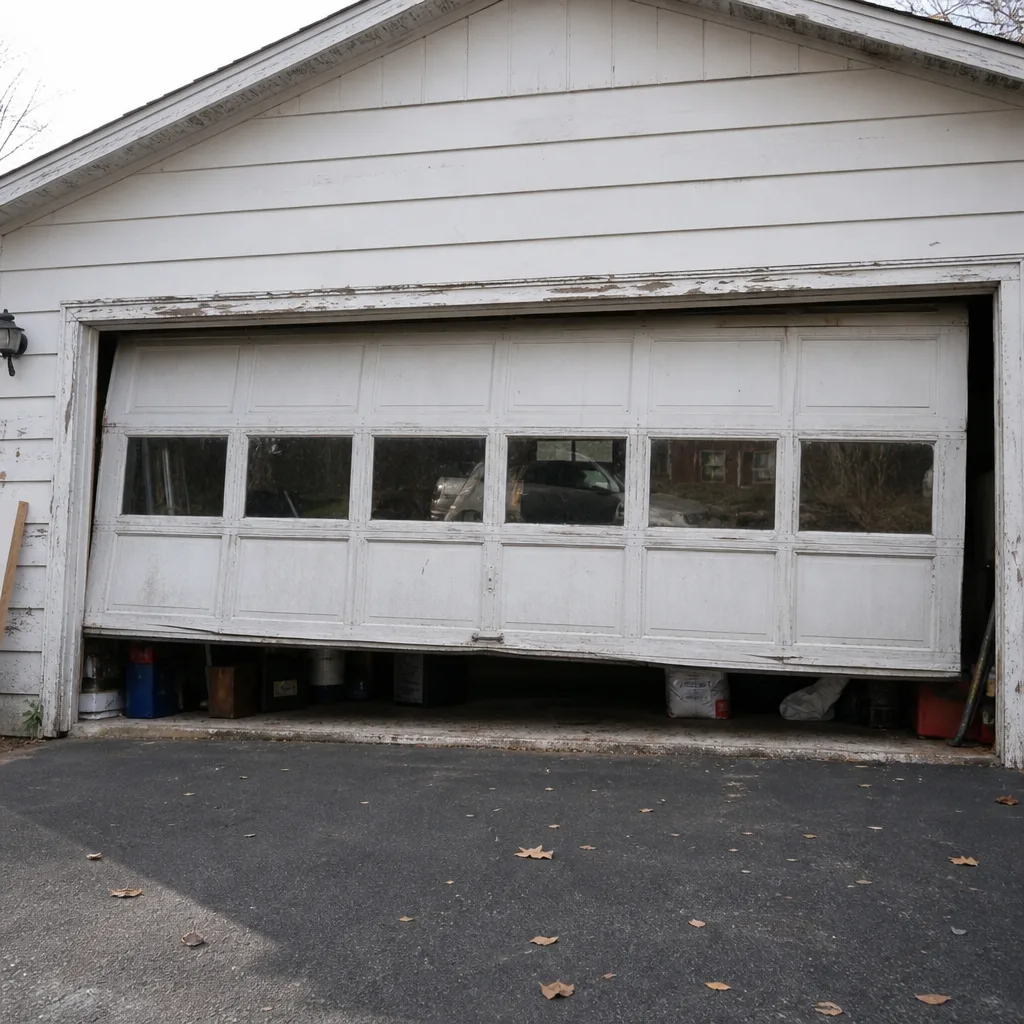 Before
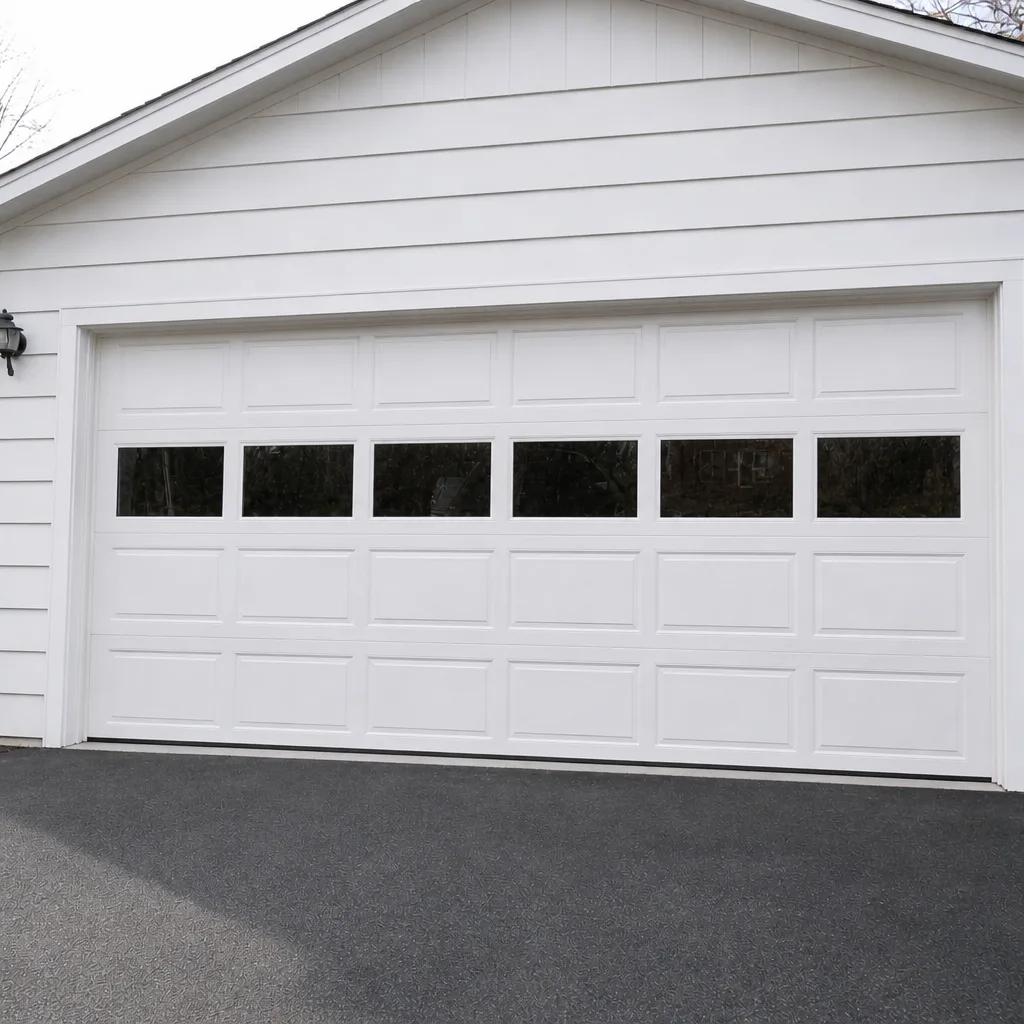 After
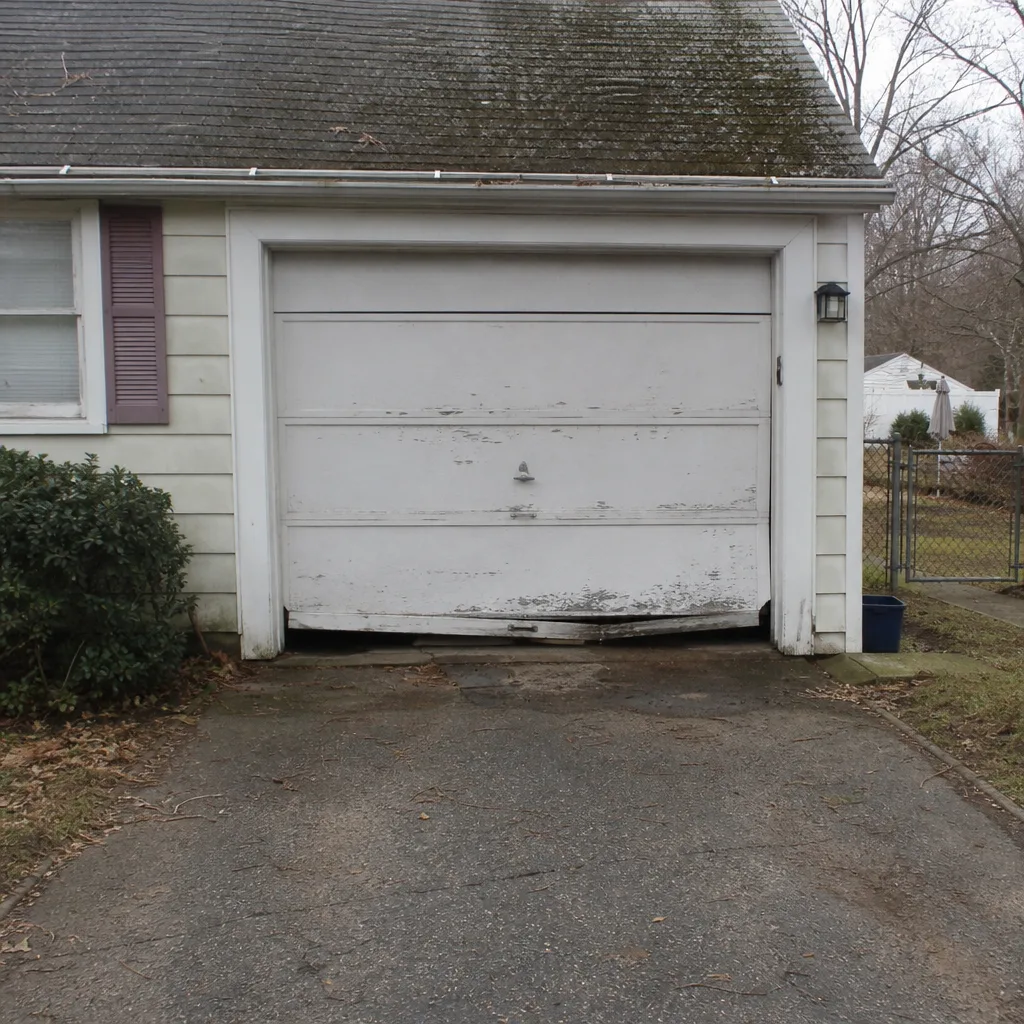 Before
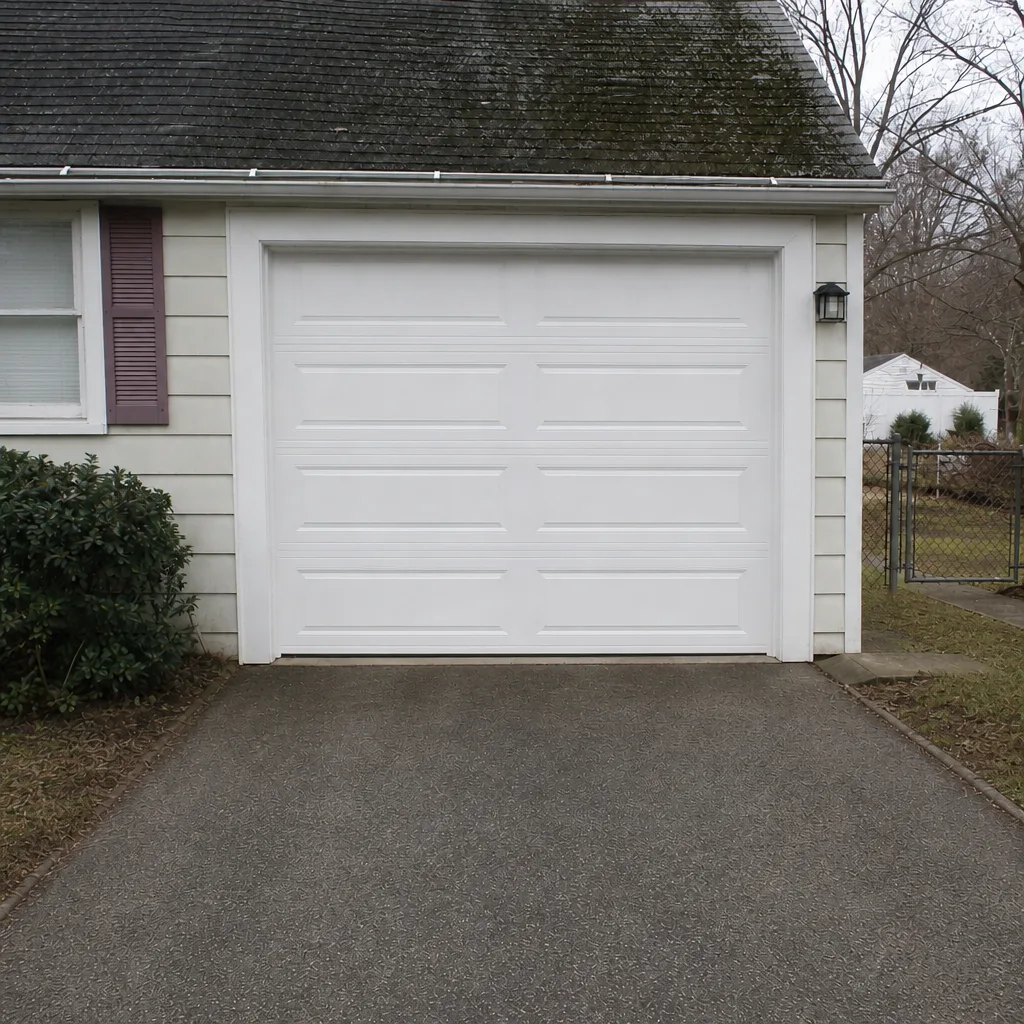 After
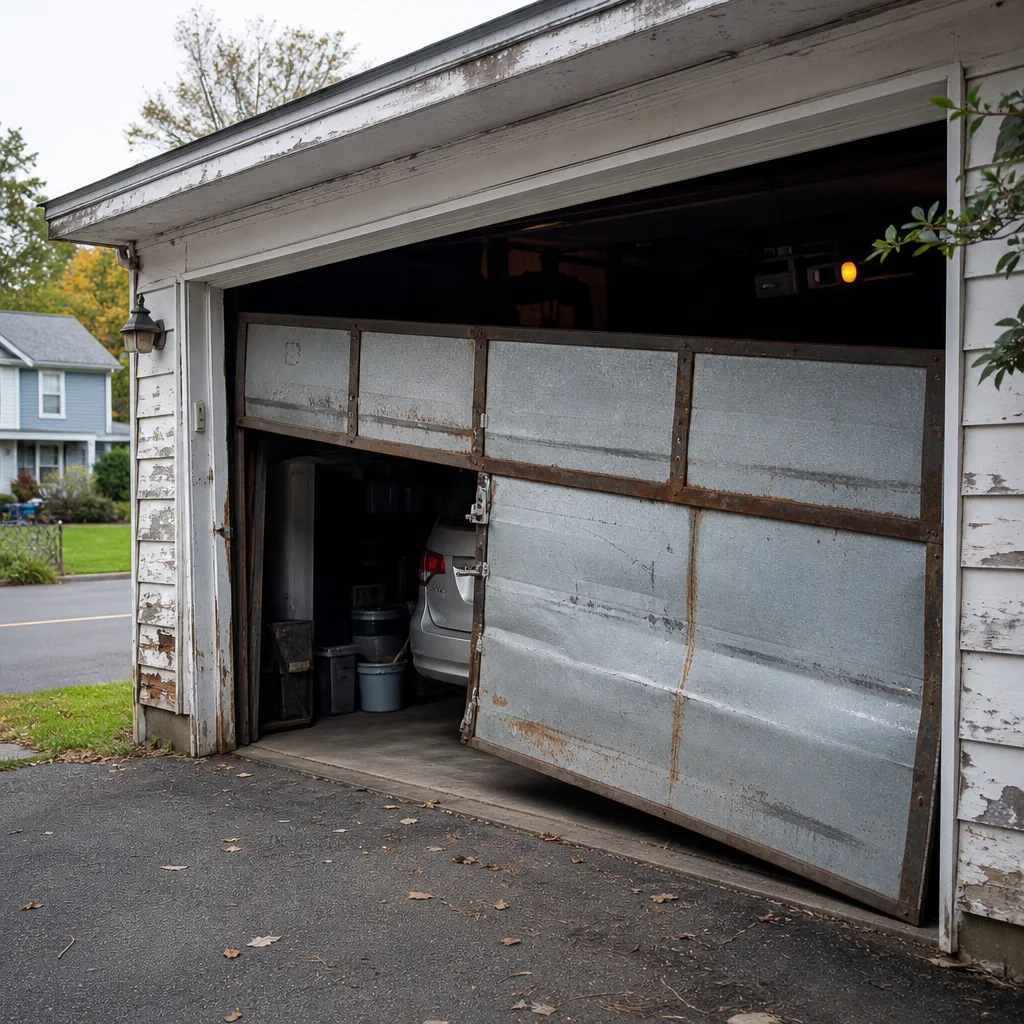 Before
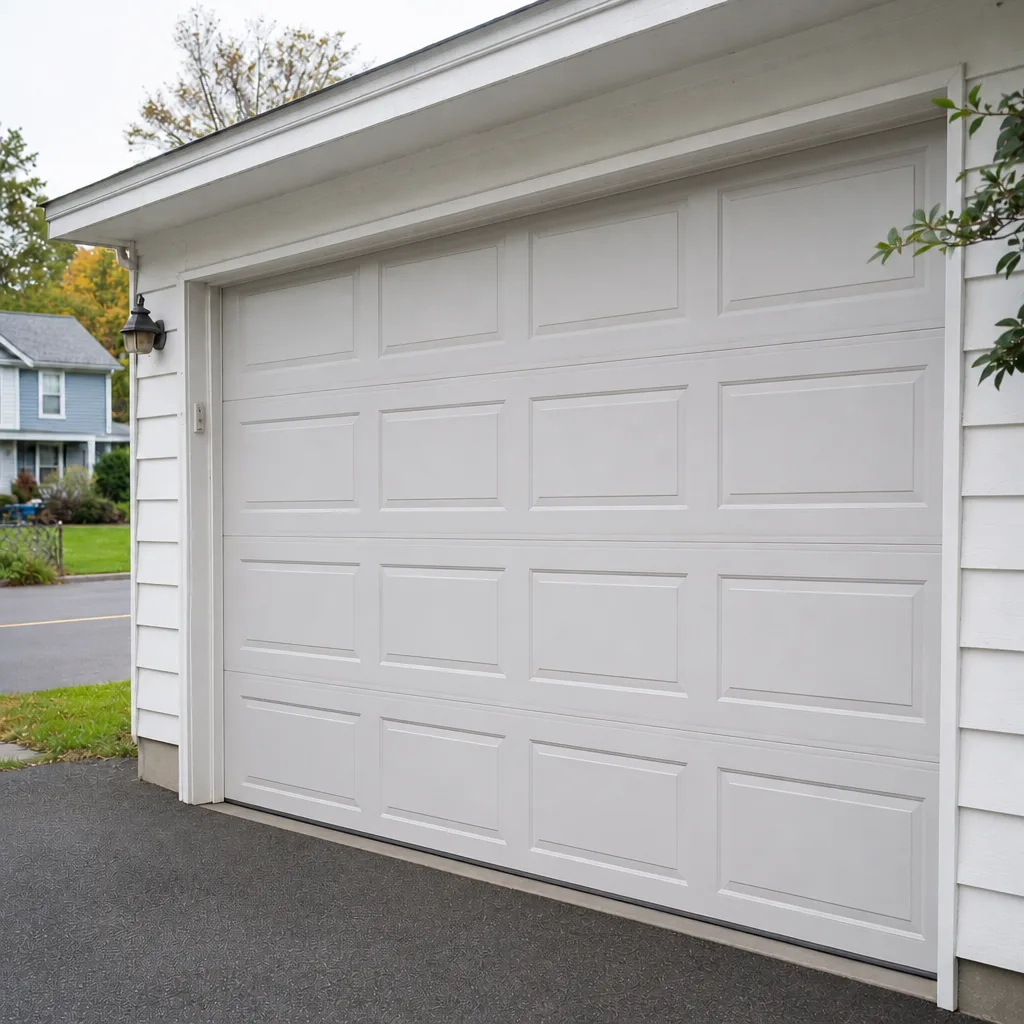 After
When to Call a Professional
Call a technician for anything involving springs, cables, drums, bent track, or a door that’s hanging crooked. Those are the jobs where stored energy makes the difference between a safe repair and a serious injury. Call for a same-day visit when the door is stuck open, the door is locked out of the closed position, or the door is hanging off its track. We work on the full range of garage door brands, from Clopay to Amarr to Wayne Dalton, so we can source the right part for your door whether it’s a common model or an older one. Bristol Garage Door Repair Co offers free estimates in Bristol. Call (888) 794-8841. We answer 24/7. Fast dispatch from 7am to 7pm, Sunday through Friday.
Frequently Asked Questions
Possibly, for some tasks. Replacing a remote battery, cleaning the photo-eye sensors, replacing a popped roller on a door at rest or lubricating the hinges are safe jobs for a careful homeowner. Anything involving springs, cables, drums, operating the manual release, or opening the opener housing should go to a technician.
Spring replacement is priced per job based on the door’s size, the spring type and whether one or both springs need replacing, so a written estimate is the only reliable number. The price set in that written estimate is the price; nothing is quoted by phone and then changed at the door. Call (888) 794-8841 for an exact quote – estimates are free.
The most likely causes are a binding roller in the track, a travel-limit setting that has drifted, or a force setting that’s too low. If the door has a broken spring, the opener can also trip its force setting as it strains to lift a door it wasn’t designed to carry. Check the sensors first, then stop running the opener and have the door checked.
No. A door with a broken spring can weigh two to three times what it does on a working spring, and manhandling it puts the full weight on cables and drums, which can snap. Keep everyone clear, leave the manual release alone, and call a technician.
Cold contracts metal, which slightly changes the door’s balance and the load on the spring. A spring that’s been in service many cycles has less margin, and the temperature swing plus the extra load is often what tips it over. The failure usually shows up right around a cold snap or the spring thaw.
Only if you can operate it safely. A door with a failed spring, a snapped cable or a crooked hang should stay in its current position with everyone clear of it. If a technician is on the way, don’t run the opener in the meantime. Call (888) 794-8841 for an exact quote – estimates are free.
The Bottom Line
Most garage door failures in Bristol sort into four categories: the opener, the springs, the track and rollers, or the cables and drums. The fastest way to a correct repair is to match the symptom to the sound, decide which category you’re in, and then leave the spring and cable work to a specialist. Small fixes – a sensor clean, a dry hinge, a popped roller – you can handle. The moment the door has lost its balance, hangs crooked, or stopped after a bang, the right move is to stop and call. Bristol Garage Door Repair Co are the people who do this every day, and we can walk you through a free estimate. Call (888) 794-8841. We answer 24/7. Fast dispatch from 7am to 7pm, Sunday through Friday. For the bigger picture on services and coverage, start at Bristol Garage Door Repair Co.
Written by the team at Bristol Garage Door Repair Co.