
Last updated November 21, 2026
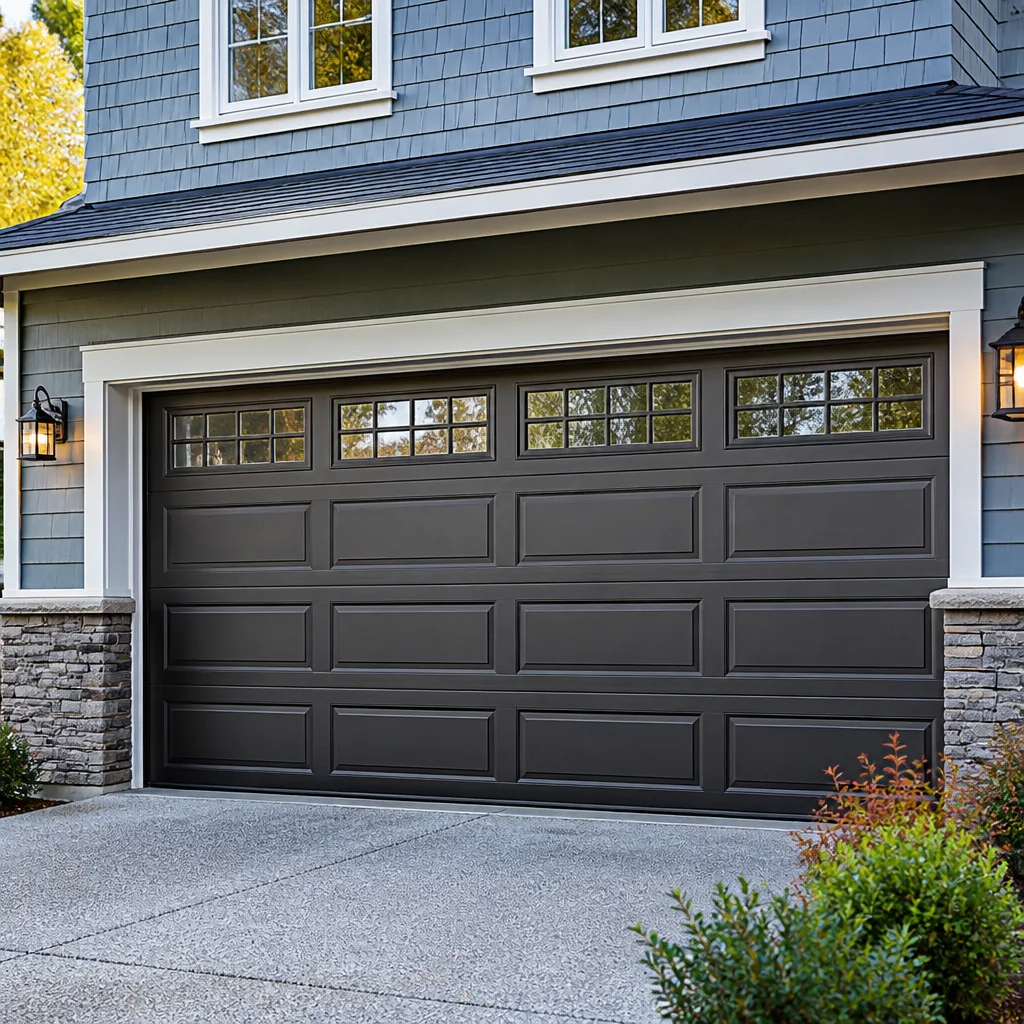 Raised-panel steel
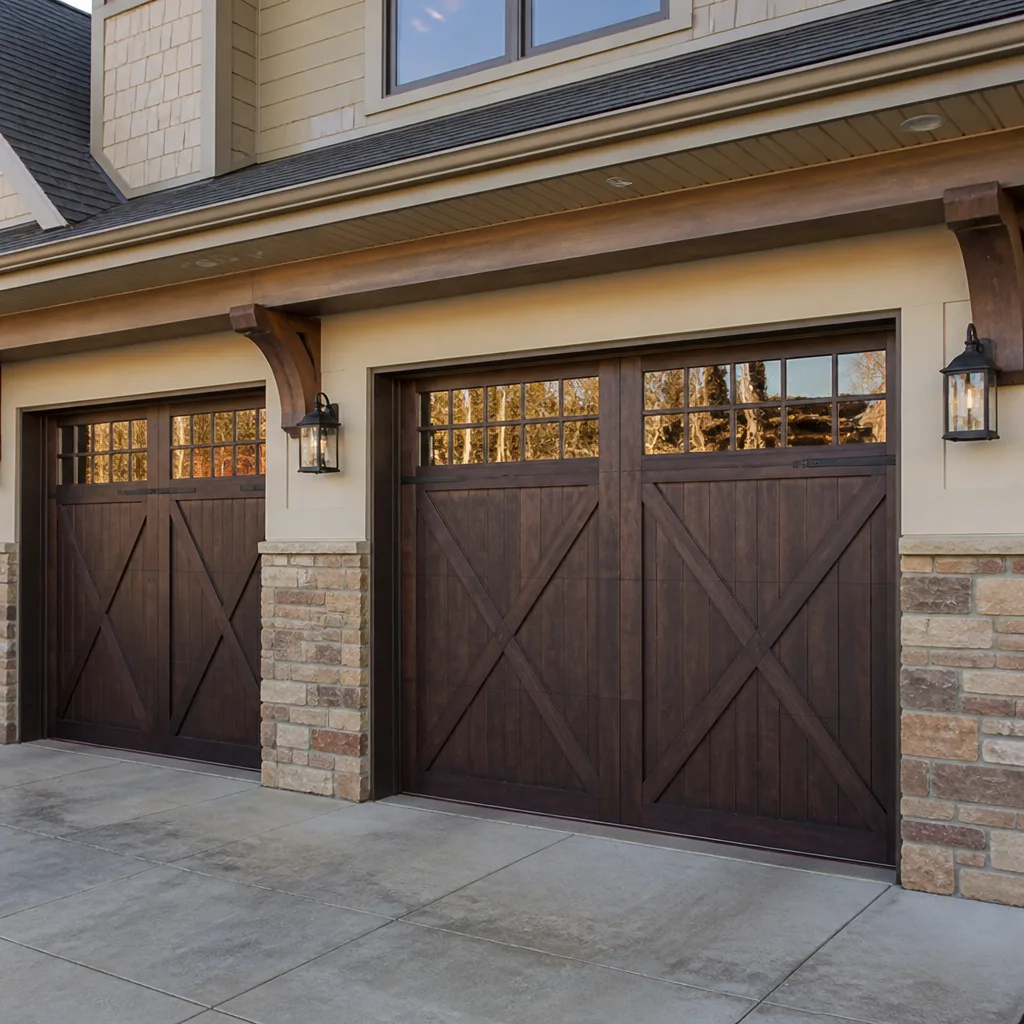 Carriage house
 Modern flush
 Full-view glass
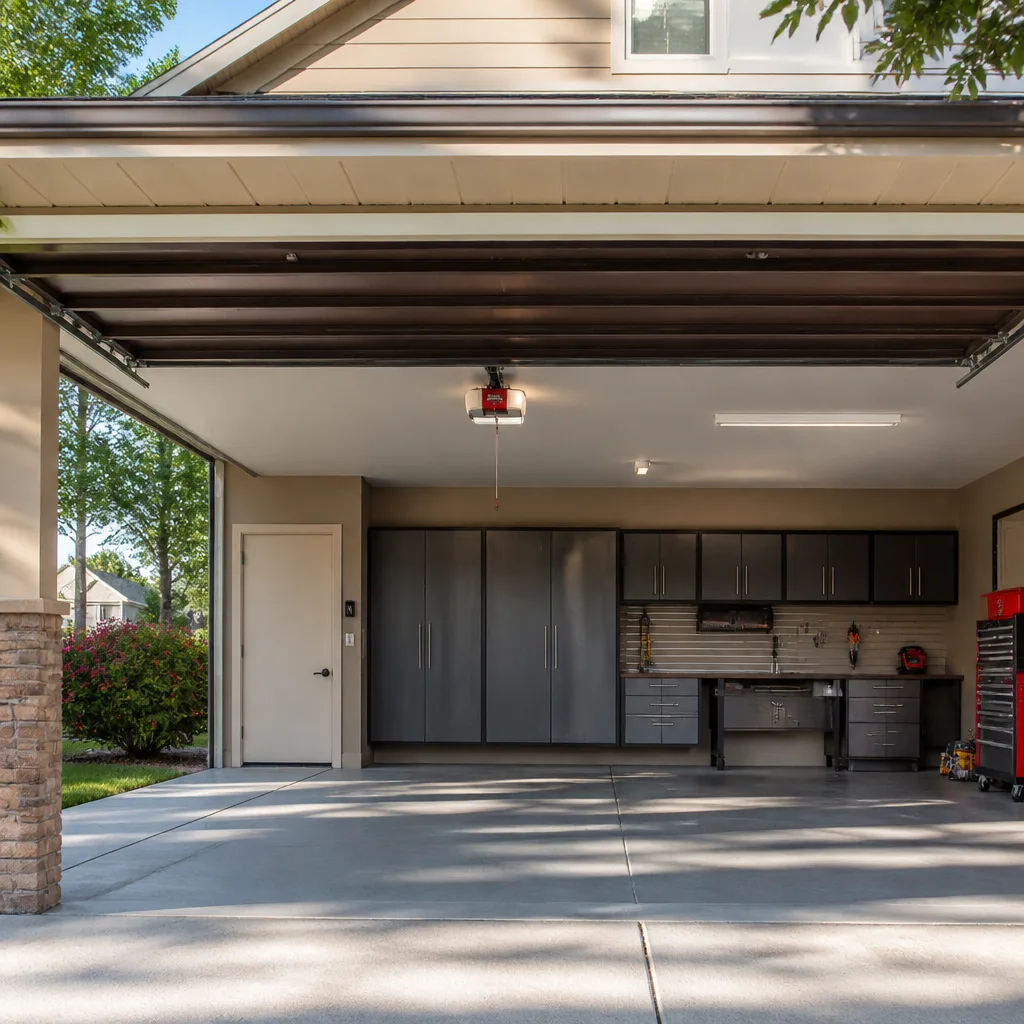 LiftMaster openers
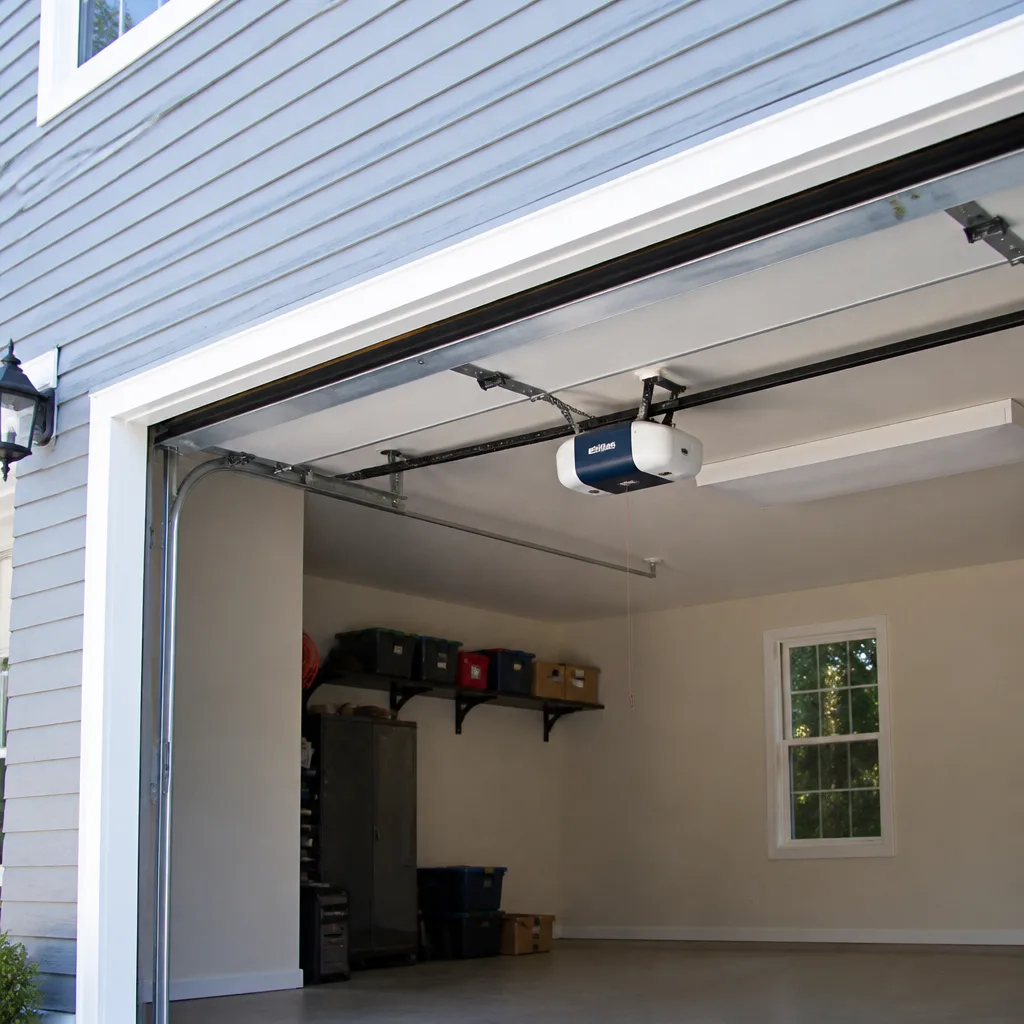 Chamberlain openers
Full 25-point door and opener safety check with every visit - springs, cables, rollers, tracks, and your LiftMaster or Chamberlain opener included
You get a price before we start. It does not change when the pro arrives.
Get your free estimateGarage Door Warning Signs: A Bristol Homeowner’s Reference Guide
A garage door that hesitates for half a second before moving is not “just getting old.” That brief pause is one of the clearest early indicators of a specific mechanical failure with a predictable endpoint, and it will not fix itself by spring. Most garage door breakdowns we see in Bristol follow a visible script: the door tells you something is wrong for weeks before it stops working entirely. The problem is that the early signs are easy to explain away. Homeowners hear a new rattle, notice a slight sag, and decide it can wait. This guide walks through what each noise, movement irregularity, and visual sign actually points to mechanically, which warnings give you weeks to schedule service, and which mean you should stop using the door today.
Quick Answer
The most important garage door warning signs are a door that pauses before moving, a loud bang from the torsion bar, sudden jerking or uneven travel, a gap at the bottom, and an opener that struggles against a door that feels heavy. Signs like a rough-sounding roller or a slow-to-close door usually give you a few weeks to book service. A snapped spring, a door off its track, or a frayed cable means stop using the door until a technician evaluates it. In Bristol, cold snaps push tired springs and stiff lubricant into failure, so warning signs often appear first in the coldest months.
Styles & brands we work with
- Raised-panel steel
- Carriage house
- Modern flush
- Full-view glass
- LiftMaster openers
- Chamberlain openers
Table of Contents
- Symptom-by-Symptom: What Each Sign Actually Points To
- The Noises You Should Not Ignore
- Why Some Warning Signs Only Appear in Cold Weather
- When the Problem Is the Door, Not the Opener
- Fix in Weeks vs. Stop Using the Door Today
- The Three Warning Signs Bristol Homeowners Dismiss Most
- Visual Checks You Can Do Yourself in Two Minutes
- Simple Habits That Prevent Most Failures
Symptom-by-Symptom: What Each Sign Actually Points To
Garage doors are mechanical systems with a small number of moving parts, and most failures trace back to one of them. When you know which component produces which symptom, you can describe the problem to a technician accurately and skip the guesswork. Here is a symptom-by-symptom breakdown based on our work around Bristol.
- A door that pauses on the first inch of travel. This usually points to a torsion spring that has lost tension or a binding track. A small pause on a garage door spring repair call is often the difference between a straightforward spring replacement and a snapped spring that forces the door to stay closed.
- Jerking or shuddering while opening. Worn rollers, a warped track, or a door that has slipped off one of its hinges. Jerking is a common early sign of misalignment.
- A door that stops halfway and reverses. The opener’s travel limits or force sensor has tripped because the door is meeting resistance. That resistance is usually the actual problem.
- A visible gap at the bottom. A worn bottom seal lets in drafts and moisture, and it causes an out-of-balance door to sit unevenly. Seals are cheap to replace before they let water reach the door’s hardware.
- A sagging or bent top panel. On panel doors like a Clopay or Amarr model, a bent top section can indicate worn hinges or a door that is carrying more weight than its hardware can support.
- Loose or rattling hardware. Every bolt, hinge, and bracket works slightly loose over time. A rattling door before it opens usually means something is about to shear off.
None of these signs are cosmetic. Each one narrows down which part is failing, and each one gets more expensive to fix the longer you wait.
The Noises You Should Not Ignore
A garage door should sound the same every time it moves. When the sound changes, the door is telling you where the problem is. Here is how we read the most common noises during service calls in Bristol.
- A sharp bang from the top of the door. That is almost always a torsion spring snapping. It is one of the few warning signs that means the door should not be operated until a technician arrives, because a broken spring leaves the full weight of the door unsupported.
- A grinding rumble while the door travels. Worn rollers or dry hinges. If the door still opens smoothly and the noise is only in one area, you have time to schedule service. If the noise is loud and constant, the rollers may be seizing inside the track.
- A squeal that fades once the door is moving. Typically a dry torsion tube or a worn bearing. Lubrication and bearing replacement are usually modest repairs, but a squeal ignored for long enough takes the bearing with it.
- A rhythmic clicking that speeds up with the door. A loose hinge or a cracked roller. Rhythmic clicks often come from a single component that is working its way free.
- A scraping sound from the track. The door is riding against the track, which points to worn rollers or a bent section. Scraping is one of the more common reasons we get called to a garage door repair appointment in Bristol.
- Silence followed by a motor hum. The opener runs but the door does not move. That is usually a stripped gear or a broken spring rather than an electrical fault.
If you only remember one thing from this section: a new noise on a door that used to be quiet is a warning, not a personality trait.
Why Some Warning Signs Only Appear in Cold Weather
Some garage door problems show up in January and disappear by April. That pattern is not a coincidence, and it tells a technician a lot about which component is failing. Bristol winters bring enough freezing nights to put real stress on a garage door system, and the signs that only appear in the cold are the most commonly misread.
Metal contracts in cold weather. Springs lose a little tension. Lubricant thickens and stops doing its job. A door that felt fine in October can feel heavy and loud in February for three reasons:
- Stiff lubricant. Cold grease on hinges and tracks turns the door’s smooth travel into a stiff push. The opener has to work harder, which is why many “weak opener” complaints start in winter.
- Spring fatigue exposed by temperature. A spring near the end of its cycle may still work in warm weather and fail on the first genuinely cold morning. This is why spring breaks often cluster in the colder weeks.
- Drafts and binding. A door that has always run slightly tight can start to bind at the edges when the frame contracts. If the door only struggles on the coldest days, the track or the seal is usually the culprit.
When a homeowner tells us the door “only acts up when it’s cold,” we know to look first at the balance of the door and the condition of the springs. That temperature-specific detail is a diagnostic shortcut, and it is the reason we ask about it on every service call in Bristol.
When the Problem Is the Door, Not the Opener
Most homeowners assume a misbehaving door is an opener problem. In our experience, the opposite is more often true: the opener is being asked to compensate for a door that is out of balance, and it eventually gives out. Recognizing the difference can save you the cost of replacing a motor that did not need replacing.
An opener is designed to lift a balanced door with a modest amount of force. When the door is out of balance, the opener does the lifting, and it does it every single day. Symptoms that point at the door rather than the motor:
- The opener strains or slows near the top of the travel. A balanced door should move at a consistent speed. Slowing down is a sign the door is fighting gravity.
- The door reverses on its own partway up. The safety sensor has detected resistance inside the operator’s expected range. Resistance means a binding track or a failing spring.
- The opener clicks but the door barely moves. On a LiftMaster or Chamberlain belt drive, this often means a stripped gear inside the unit, but we always verify the door’s balance before condemning the opener.
- The remote works but the wall switch does not, or vice versa. That is usually wiring or a logic board, not the door. Opener-specific faults deserve an opener-specific call, which is why we treat garage door opener repair as a diagnostic that starts with the door.
We work on opener systems from Genie, LiftMaster, Chamberlain, and Craftsman every week, and the single most common thing we find on a “broken opener” call is a door that needed a balance adjustment. Testing the balance is simple: disconnect the opener, lift the door halfway, and let go. A balanced door stays put. A door that drops wants a spring or track repair, not a new motor.
Fix in Weeks vs. Stop Using the Door Today
Not every warning sign means the same urgency. Some give you time to schedule a proper appointment. Others mean the door should not be operated until a professional has looked at it. Here is the line we draw.
Signs you can schedule service within a few weeks:
- A rough or rattling sound that has not changed the door’s motion
- A slow opener or a door that seems heavier than usual but still travels smoothly
- A gap at the bottom of the door or a worn weather seal
- Loose-looking hinges or brackets you can tighten gently
- A single remote that has stopped working while others still do
Signs that mean stop using the door today:
- A loud bang followed by a door that will not lift
- A visible gap or bend in the torsion bar at the top of the door
- A frayed or snapped cable hanging loose
- A door that has come out of its track or is hanging at an angle
- A door that closes on its own or drops when released halfway
The second list is where a garage door becomes a safety issue. Torsion springs and cables store enormous energy, and they can cause serious injury if touched while under tension. Do not attempt to adjust a spring or cable yourself. Call a trained technician. The good news is that most of the items on the second list are still modest repairs if you act before the door is used again, which is exactly the case for the spring repair calls we handle. A broken spring caught early is a straightforward replacement. A door forced through weeks of use after the spring failed can take track, hinge, and opener damage with it. If your door fails on a Saturday, call us anyway: we are closed Saturdays, and we will book you into the next opening, Sunday through Friday.
The Three Warning Signs Bristol Homeowners Dismiss Most
Some warning signs get rationalized more than others. These three show up in our service calls around Bristol again and again, and they are almost always described to us after the fact as something the homeowner “thought was normal.”
- The half-second hesitation at the start of travel. It feels like the door waking up. Mechanically, it usually means the spring has lost tension, and the opener is fighting to lift a door it was not designed to lift unaided. Homeowners dismiss it because the door still opens. It always fails eventually, and the failure is usually a snapped spring.
- A door that sounds rougher than it used to. Grinding or rattling gets written off as “an old door.” In reality it is worn rollers or dry tracks, and both are among the least expensive repairs on a garage door. Left alone, worn rollers can jump the track and turn a small fix into a bent-panel job.
- A door that only misbehaves in cold weather. We covered why this happens, but the dismissal is the interesting part: homeowners treat a winter-only problem as a weather quirk. It is actually a direct signal that a spring is exhausted or a track is binding, and it is one of the most reliable predictors of a failure in the following weeks.
Each of these signs is a repair a technician can usually diagnose in a single visit. None of them require a new door or a new opener.
Visual Checks You Can Do Yourself in Two Minutes
You do not need to be a technician to spot most of the warning signs a professional looks for. These checks are safe to do from the ground with the door closed and the opener disconnected. Do not touch springs or cables, and do not reach inside the track or the torsion assembly.
- Look at the springs above the door. A torsion spring should be one continuous coil. A visible gap in the coil means it has broken.
- Look at the cables on each side. Cables should run straight and stay taut. A cable that sags, frays, or has wrapped around the drum has failed and needs professional attention.
- Look at the rollers inside the track. They should sit evenly and roll without wobble. A cracked or dislodged roller is a sign the door needs service soon.
- Look at the door’s alignment. Stand back. The door should sit level in its frame with even gaps on both sides. A door that is low on one side has a balance problem.
- Lift the door by hand. With the opener disconnected, lift the door to waist height and let go. A balanced door stays where you left it. A door that drops needs spring work.
- Look at the bottom seal. A cracked or torn seal lets water in and should be replaced before it does damage.
- Test the safety reverse. Place a small object under the closing door. The door should reverse on contact. If it does not, stop using the opener until a technician adjusts it.
Two minutes of checking takes away most of the guesswork. If any of these checks fail, a call to a specialist is cheaper than the repair you will need after the door fails under load. If you are unsure whether a brand-specific part is at fault, our technicians work on Genie, Wayne Dalton, Amarr, and the other major systems by name, so they can identify the exact hardware on your door rather than guessing.
Simple Habits That Prevent Most Failures
Garage doors fail for predictable reasons, and most of those reasons are preventable with a small amount of attention. The door itself does not need much, but what it needs is regular.
- Lubricate the moving parts twice a year. Hinges, rollers, and the torsion tube benefit from a light garage door lubricant. Use a product designed for the job, and avoid spraying the track itself, which collects grit.
- Test the balance every few months. The disconnect-and-lift test is the single most useful check a homeowner can do. It catches spring fatigue before the spring breaks.
- Test the safety reverse monthly. The sensor and reverse function are the door’s safety system. A door that does not reverse on contact should not be operated until it is fixed.
- Tighten what you can reach. A screwdriver and a gentle hand on the hinge brackets will do. If a bolt is seized or the hardware looks damaged, leave it for a technician.
- Listen to the door. The most reliable maintenance habit is paying attention to changes. A door that sounds different is asking for attention before it fails.
The brand on your door does not change these basics. A LiftMaster-equipped door and a Wayne Dalton door both need lubricant, a balance check, and someone watching for new noises. A technician who works on your specific system can also spot wear that a homeowner cannot see from the ground, which is why a single annual service call is worth more than the cost of the repairs it prevents. If you are planning ahead rather than repairing, a garage door installation is also the moment to ask about routine maintenance for the new system, so the door starts its life with a schedule in place.
Common Mistakes to Avoid
- Forcing a door that will not open. If the door will not lift, the spring or cable has likely failed. Forcing it can bend the tracks and turn a spring replacement into a full door replacement, and track damage is one of the more expensive garage door repairs we see in Bristol.
- Doing your own spring repair. Torsion springs are under extreme tension and can cause severe injury if handled without the right tools and training. This is a job for a trained technician, every time.
- Assuming every problem is the opener. Replacing an opener to fix a door that was out of balance leaves you with the same problem and a lighter wallet. Test the balance before you blame the motor.
- Ignoring a winter-only problem. Bristol cold snaps expose tired springs and binding tracks. A door that acts up only in the cold is not curing itself; it is waiting for a colder morning.
- Spraying the track with household oil. Ordinary oil attracts grit and makes the rollers drag. Use a proper garage door lubricant, and use it on the hardware, not the track.
- Waiting for a full failure. A half-second hesitation today is a snapped spring in a few weeks. Early repairs are cheaper, and they keep the rest of the door’s hardware out of harm’s way.
- Trusting a generalist for specialist work. A garage door is a balance system, not a handyman project. A technician who works on doors every day finds the actual fault faster than someone who handles them once a month.
See the difference
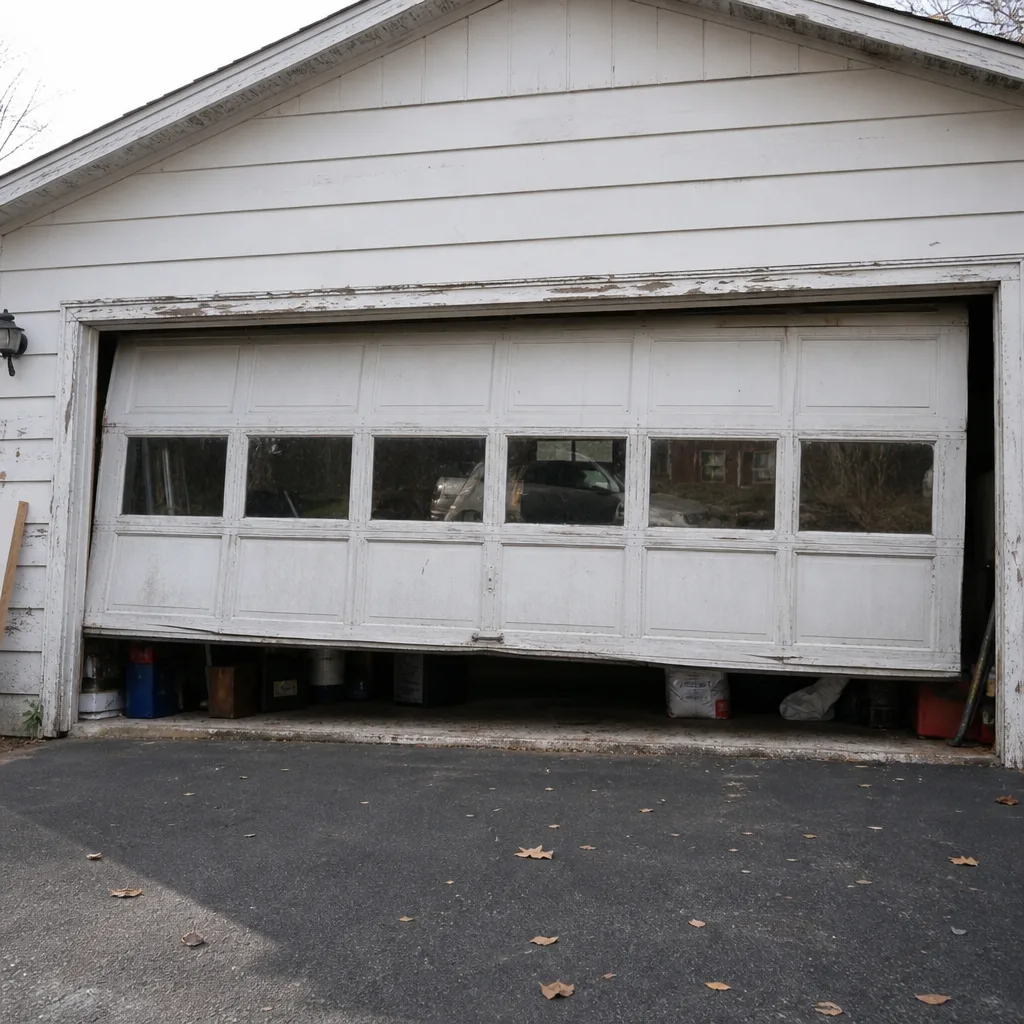 Before
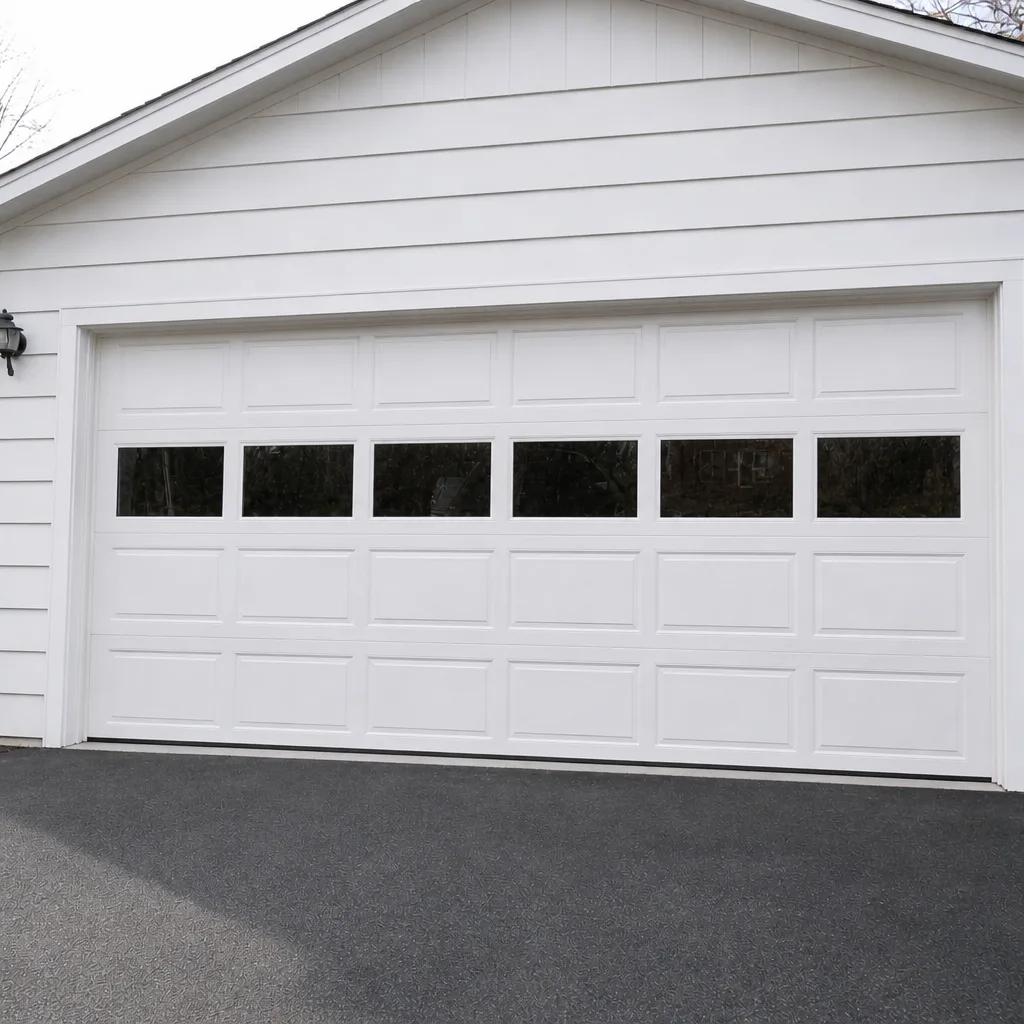 After
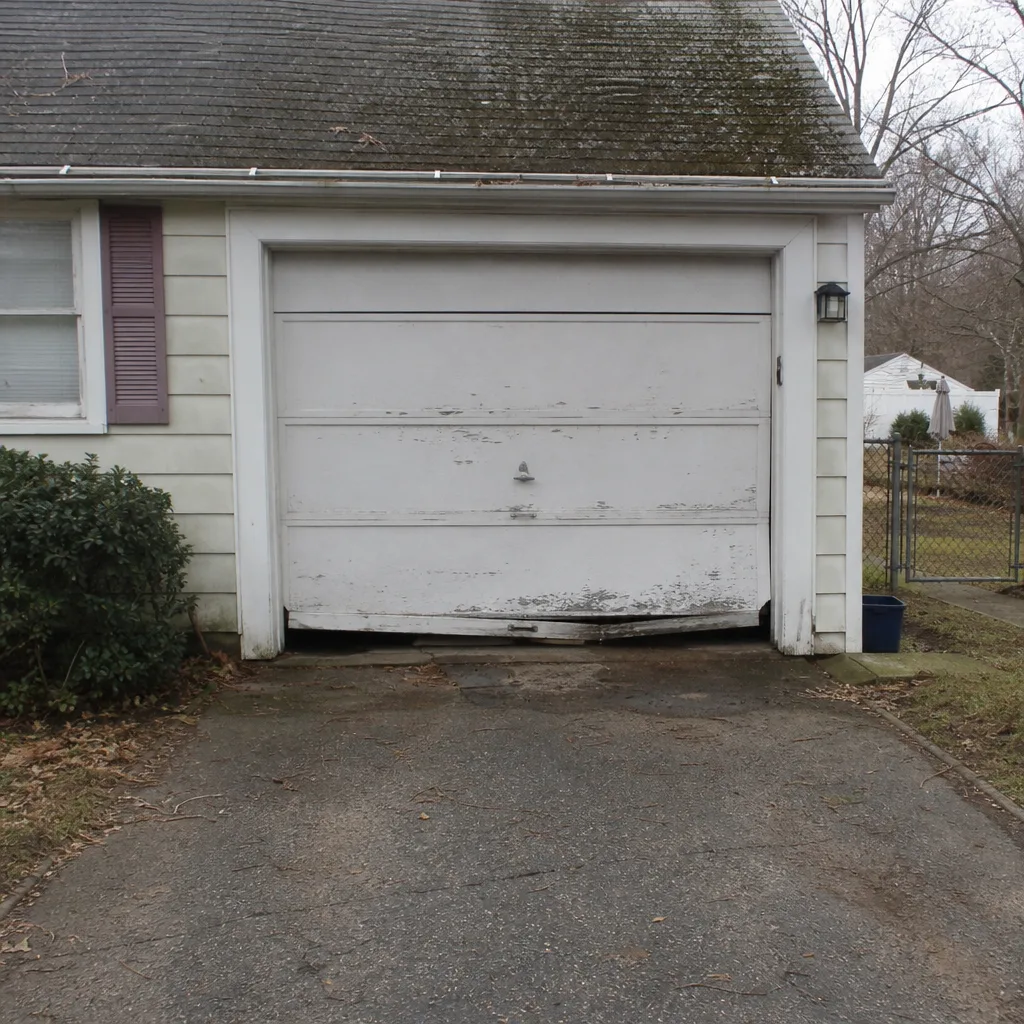 Before
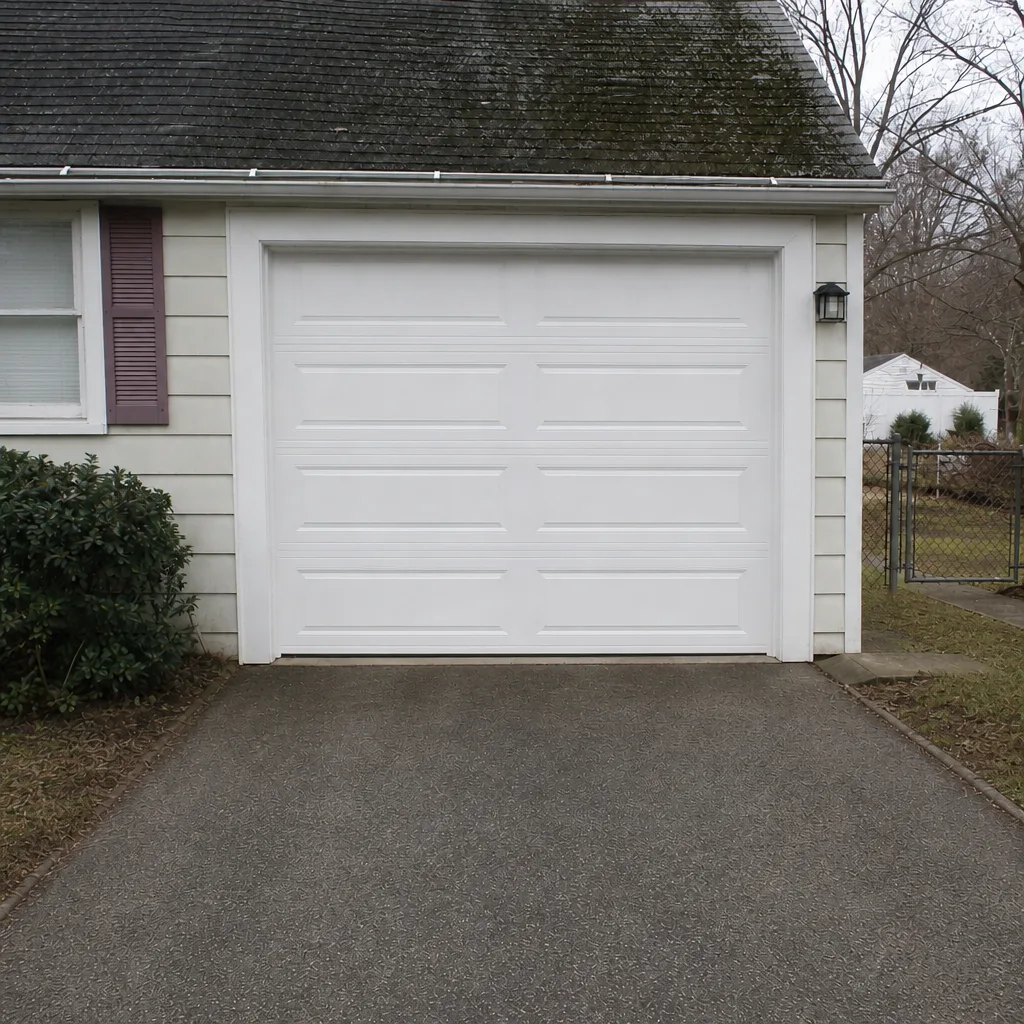 After
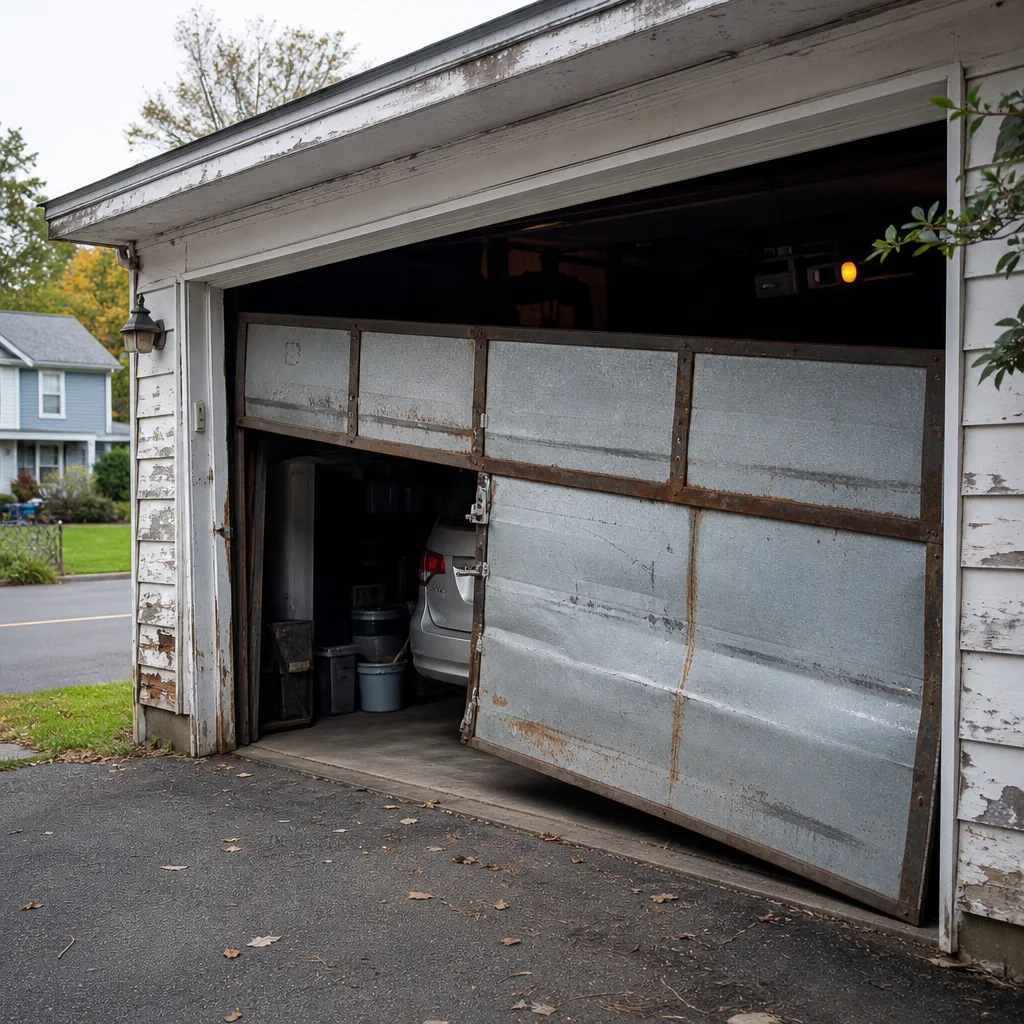 Before
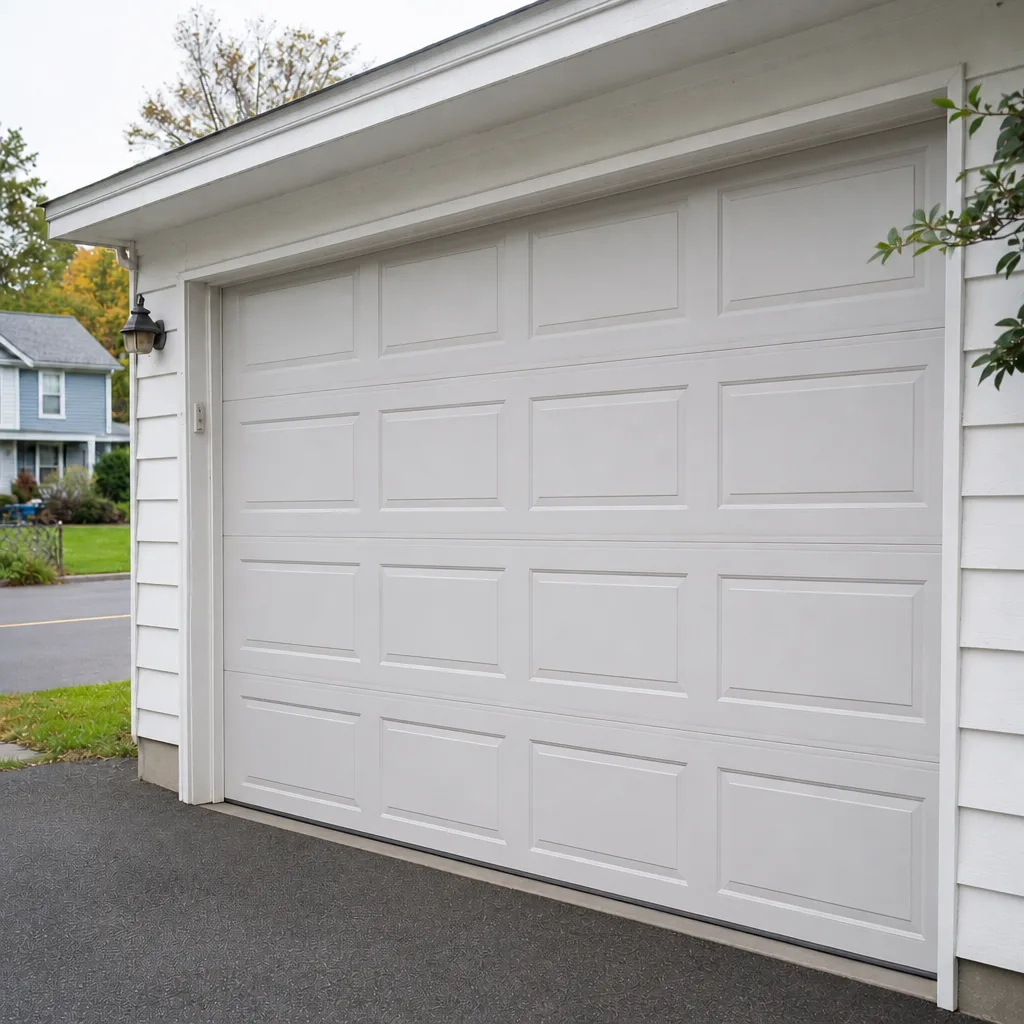 After
When to Call a Professional
Call a professional when the door will not move at all, when you hear a bang from the spring assembly, when the door is off its track or hanging unevenly, or when the opener struggles against a door that feels heavy. Also call if a warning sign has appeared and stuck around for more than a week; persistent symptoms do not usually go away, and they tend to get more expensive. Bristol Garage Door Repair Co offers free estimates in Bristol. Call (888) 794-8841. We answer 24/7. Fast dispatch from 7am to 7pm, Sunday through Friday. Our technicians have up to 15 years of experience, and every job is a garage door job, not a side service. We quote the work and get your agreement before anything starts, so you know the price before the repair begins.
Frequently Asked Questions
A half-second hesitation before the door starts moving is usually the first warning sign, and it typically points to a spring that has lost tension. If you notice it, have the door’s balance checked before the spring fails completely. Call (888) 794-8841 for a free estimate. We answer 24/7. Fast dispatch from 7am to 7pm, Sunday through Friday.
No. A door with a broken torsion spring should not be operated, because the spring no longer supports the door’s weight and the opener will be strained or damaged. Call a technician before using the door again. Bristol Garage Door Repair Co handles this repair as a dedicated service, and the estimate is free.
Cold weather exposes a tired spring and thickens lubricant, so a door that runs fine in summer can bind or sound rough on a freezing morning. The cold-specific behavior is a diagnostic clue, not a coincidence. If the problem showed up this winter, book a service appointment in Bristol before the next cold snap. Call (888) 794-8841.
A loud bang from the spring assembly usually means a torsion spring has snapped, and the door is no longer balanced. Do not attempt to lift or operate the door, and do not touch the spring or cable. Call a trained technician to replace the spring safely.
Disconnect the opener, lift the door to waist height, and let go. If the door drops, the door needs repair; if it stays put and the opener still fails, the opener needs attention. Most “broken opener” calls in Bristol turn out to be a door balance problem. Call (888) 794-8841 for a free diagnosis.
The local professionals we connect you with are licensed and insured as their state requires. Bristol Garage Door Repair Co connects you with vetted local specialists who work on garage doors every day. Call (888) 794-8841. Estimates are free, and the price is confirmed in writing before any work begins.
The Bottom Line
Garage door failures almost always come with warnings. A hesitation at the start, a new noise, a rough ride in cold weather, and a door that only acts up on freezing mornings are all specific signals pointing at specific parts. Some warning signs give you a few weeks to schedule service. A snapped spring, a frayed cable, or a door off its track means stop using the door today. In Bristol, where cold snaps put real stress on tired springs, paying attention to the early signs is the cheapest repair you will ever make. If your door has been telling you something, call (888) 794-8841 for a free estimate. We answer 24/7. Fast dispatch from 7am to 7pm, Sunday through Friday.
Written by the team at Bristol Garage Door Repair Co.